
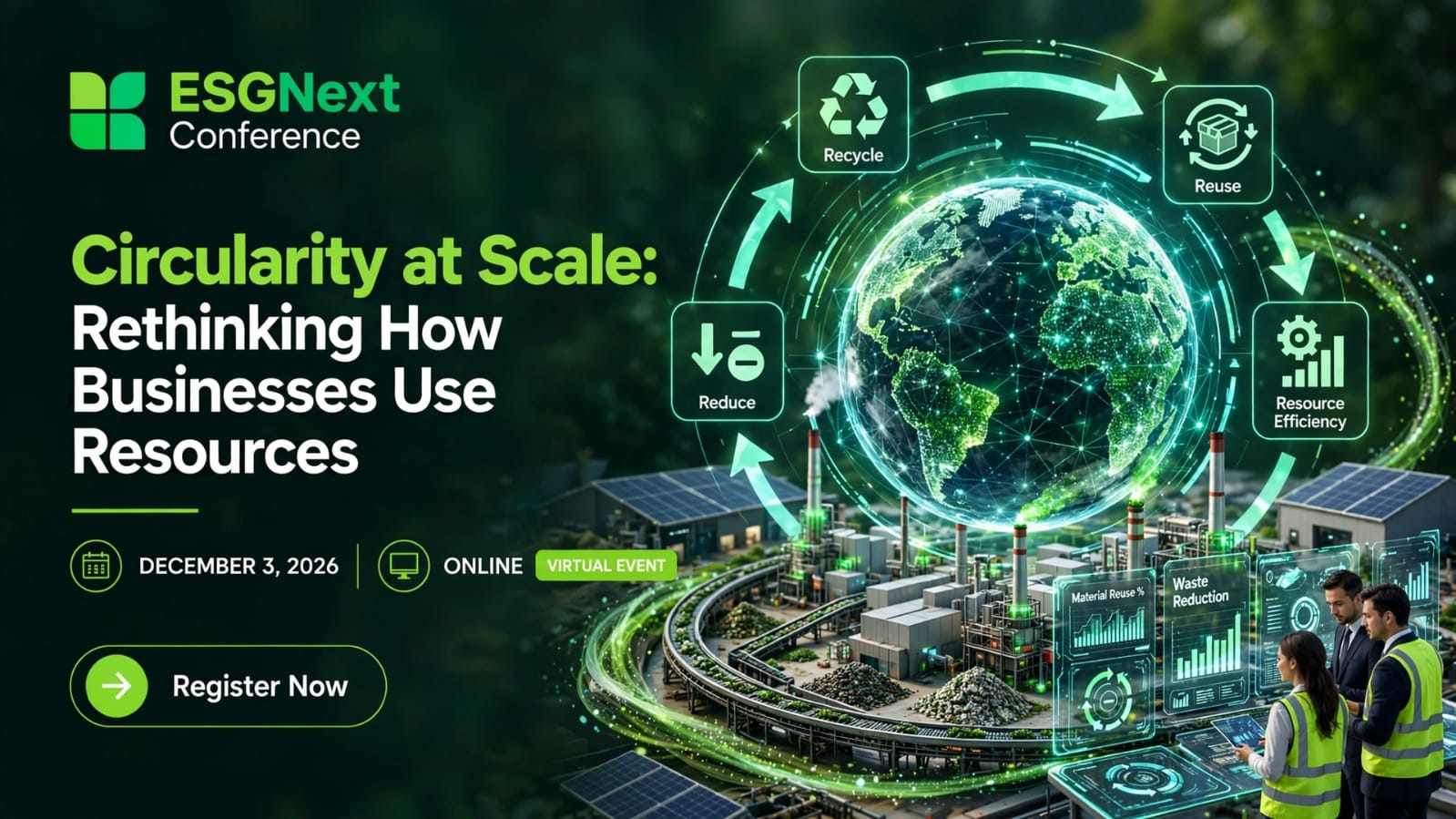
For decades, business growth has largely followed a linear model: extract resources, make products, use them, and dispose of what remains. That model is becoming increasingly difficult to sustain as companies face resource constraints, rising costs, stricter environmental expectations, and growing pressure to reduce waste.
Circularity offers a different approach. Instead of treating materials as something to consume and discard, businesses can design operations around keeping resources in use for as long as possible—reducing material consumption, extending product lifecycles, reusing components, recovering valuable materials, and finding productive uses for waste.
From waste reduction to resource efficiency
Circularity is often associated with recycling, but its scope is much broader. Recycling is only one part of a circular business model. The larger opportunity is to rethink how products and processes are designed from the beginning.
Companies can use durable materials, modular designs, and repairable components to extend product lifespans. Manufacturing operations can recover production waste and return materials to the process. Businesses can also explore refurbishment, remanufacturing, and resale models that create additional value from products that might otherwise become waste.
This approach can improve resource efficiency while reducing exposure to volatile raw-material prices and supply disruptions.
Designing circularity into operations
Scaling circularity requires it to become part of everyday business decisions rather than remaining a standalone sustainability initiative.
Procurement teams can assess materials based on recycled content, durability, recyclability and responsible sourcing. Product teams can consider how easily products can be repaired, upgraded or disassembled. Operations teams can identify opportunities to reduce material losses and reuse by-products.
Technology can support these efforts by improving visibility across the product lifecycle. Digital product passports, material tracking systems, IoT sensors, and data analytics can help companies understand where materials come from, how products are being used, and what happens at the end of their first lifecycle.
Better data also allows businesses to measure progress more consistently and identify where circular interventions can deliver the greatest impact.
Building circular value chains
No company can achieve circularity at scale alone. Materials often move through complex networks of suppliers, manufacturers, distributors, customers and waste-management providers.
A practical example is Philips’ lighting-as-a-service model. Instead of customers simply purchasing lighting equipment, the model allows businesses to pay for lighting as a service, while Philips remains responsible for maintaining and upgrading the system.
The example illustrates an important principle of circularity: business models can influence how products are designed and managed throughout their lifecycle. When companies retain greater responsibility for products, they have a stronger incentive to extend product life, improve efficiency and recover value from materials.
This approach can be adapted across industries. Manufacturers can develop take-back and refurbishment programs, electronics companies can design products with replaceable components, and industrial businesses can recover production materials and return them to use. The goal is to make resource efficiency part of the operating model rather than an activity that begins when a product becomes waste.
Collaboration across value chains is equally important. Manufacturers can work with suppliers to increase recycled or renewable material inputs, brands can develop collection programs with customers, and recyclers can help return recovered materials to productive use.
These partnerships can create new revenue opportunities while reducing dependence on virgin resources. The key is to make circularity part of how value is created, rather than treating it as a separate sustainability initiative.
Making circularity measurable
The transition to circularity also requires meaningful performance measures. Businesses need to look beyond waste volumes and recycling rates and examine indicators such as material productivity, product lifespan, recycled content, reuse rates and the proportion of materials kept in circulation.
When these measures are integrated into sustainability strategies and business planning, circularity becomes easier to manage, communicate and improve.
From Strategy to Action
Circularity at scale is ultimately about changing how businesses think about resources. The goal is not simply to produce less waste, but to create systems in which materials retain their value for longer.
For companies, this can strengthen resource resilience, encourage innovation, and support more efficient operating models. For the wider economy, it can help reduce dependence on finite resources and move growth toward a more regenerative model.
Explore the future of practical ESG transformation at ESG Next Awards & Conference 2026. Connect with sustainability leaders and industry experts to discover how businesses can turn ESG strategies into measurable action.
Reference
BCG. (2025). Scaling Circularity into Profitable Business Models.