
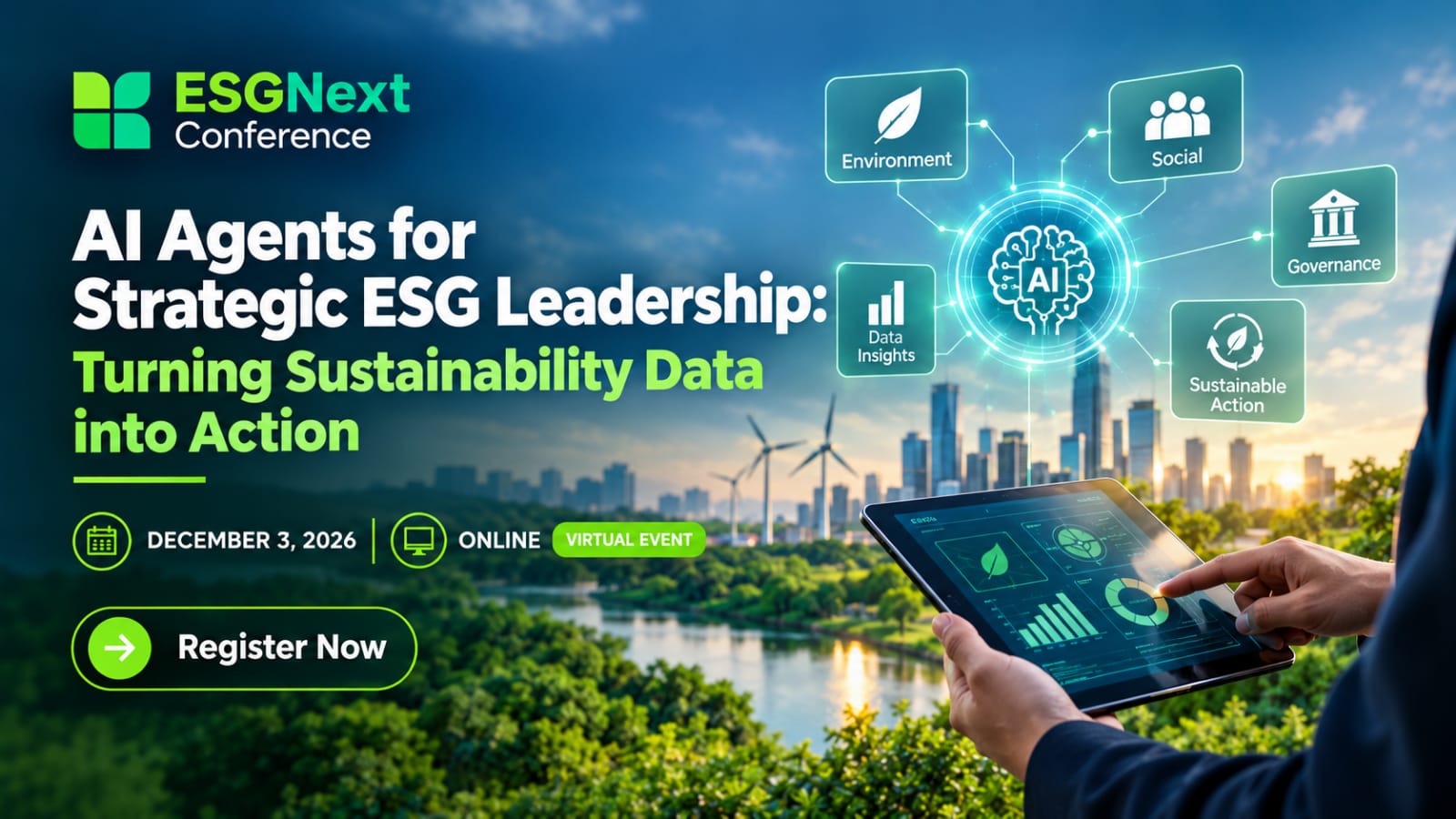
Sustainability teams today handle more ESG data than ever, including emissions figures, supplier records, energy use, workforce information, governance data, and regulatory requirements. However, much of this information remains spread across spreadsheets, business systems, supplier portals, and other platforms. This makes reporting slower, creates gaps in information, and makes it harder to turn data into action.
AI agents can help address these challenges. Unlike traditional AI tools that mainly generate text or answer questions, AI agents can carry out a series of tasks, such as collecting data,checking its accuracy, identifying missing information, matching data to reporting requirements, flagging risks, and suggesting next steps. For ESG leaders, this creates an opportunity to move beyond periodic reporting and use sustainability data to make better decisions throughout the year.
From data collection to decision-making
A major challenge in ESG reporting is data quality. Emissions data often comes from different business units, suppliers, and geographies, with inconsistent formats and assumptions. AI agents can help consolidate this information into a central ESG data hub, identify inconsistencies, trace metrics back to their sources, and prepare data for review.
For example, an AI agent could classify supplier spending into Scope 3 emissions categories, flag missing supplier data, and prepare a summary for a sustainability manager to review and approve. Another agent could monitor energy and utility data across facilities, identify unusual consumption patterns, and recommend operational changes that reduce both costs and carbon emissions.
This does not eliminate the need for human judgement. Instead, it gives sustainability teams more time to focus on strategy, stakeholder engagement, and high-value decisions. AI can handle repetitive data-processing tasks, while people provide context, oversight, and accountability.
The potential benefits are already evident in reported customer results. Sustainability platform Watershed reports that its AI agents reduced the time needed to turn raw data into actionable insights by 80% across test customers. One company completed a data-cleaning task that previously took five hours in just 20 minutes. Watershed also reports that Smiths Group saved approximately 12 weeks per year through AI-assisted sustainability work, reducing monthly Scope 1 and 2 reporting tasks from about a week to a day or less.
Making ESG reporting faster and more reliable
Reporting remains a major pressure point for organizations navigating frameworks such as CSRD, ISSB, GRI, and other disclosure requirements. Preparing an ESG report often involves months of data gathering, cross-team coordination, evidence collection, and manual checks.
AI agents can support different stages of this process. They can organize evidence, link calculations to source documents, prepare draft disclosures, and highlight areas that need review before assurance. These capabilities can make reporting faster, more consistent, and easier to audit.
More importantly, reliable ESG data should not exist only for annual reports. When sustainability information is connected to business systems, leaders can use it to guide procurement, capital allocation, product design, risk management, and decarbonization planning.
Enterprise platforms are also embedding AI into sustainability reporting workflows.
SAP’s Sustainability Control Tower supports AI-assisted ESG report generation using available sustainability metrics and reporting templates. SAP is also developing its Sustainability Regulatory Readiness Agent to help translate materiality assessment results into reporting scopes and map relevant disclosures and metrics. According to SAP, the agent could reduce the time spent configuring and maintaining reporting scopes by up to 80%, while potentially cutting external consultant costs for reporting-scope setup by up to 95%.
The leadership opportunity
The real value of AI agents lies not in automation alone, but in better decision-making. ESG leaders can use AI-enabled insights to identify major emissions hotspots, assess supplier sustainability risks, pinpoint facilities with the greatest potential for energy savings, and prioritize actions that deliver measurable environmental and business benefits.
Organizations that treat ESG data as a strategic asset will be better placed to meet regulatory expectations, build stakeholder trust, and identify new opportunities for growth. Those that rely solely on manual processes may struggle to keep pace as sustainability expectations become increasingly data-driven and assurance-focused.
Join the conversation at ESGNext Awards and Conference
At ESG Next Awards and Conference, sustainability leaders, technology experts, investors, and policymakers will explore how AI agents can strengthen ESG strategy, improve data quality, and accelerate climate action.
Discover practical applications, learn how to build trustworthy ESG data systems, and understand how to balance automation with governance and human oversight.
Register for the virtual edition of ESG Next Awards and Conference to explore how organizations are using AI agents to improve sustainability reporting, support better decisions, and deliver measurable climate action.