
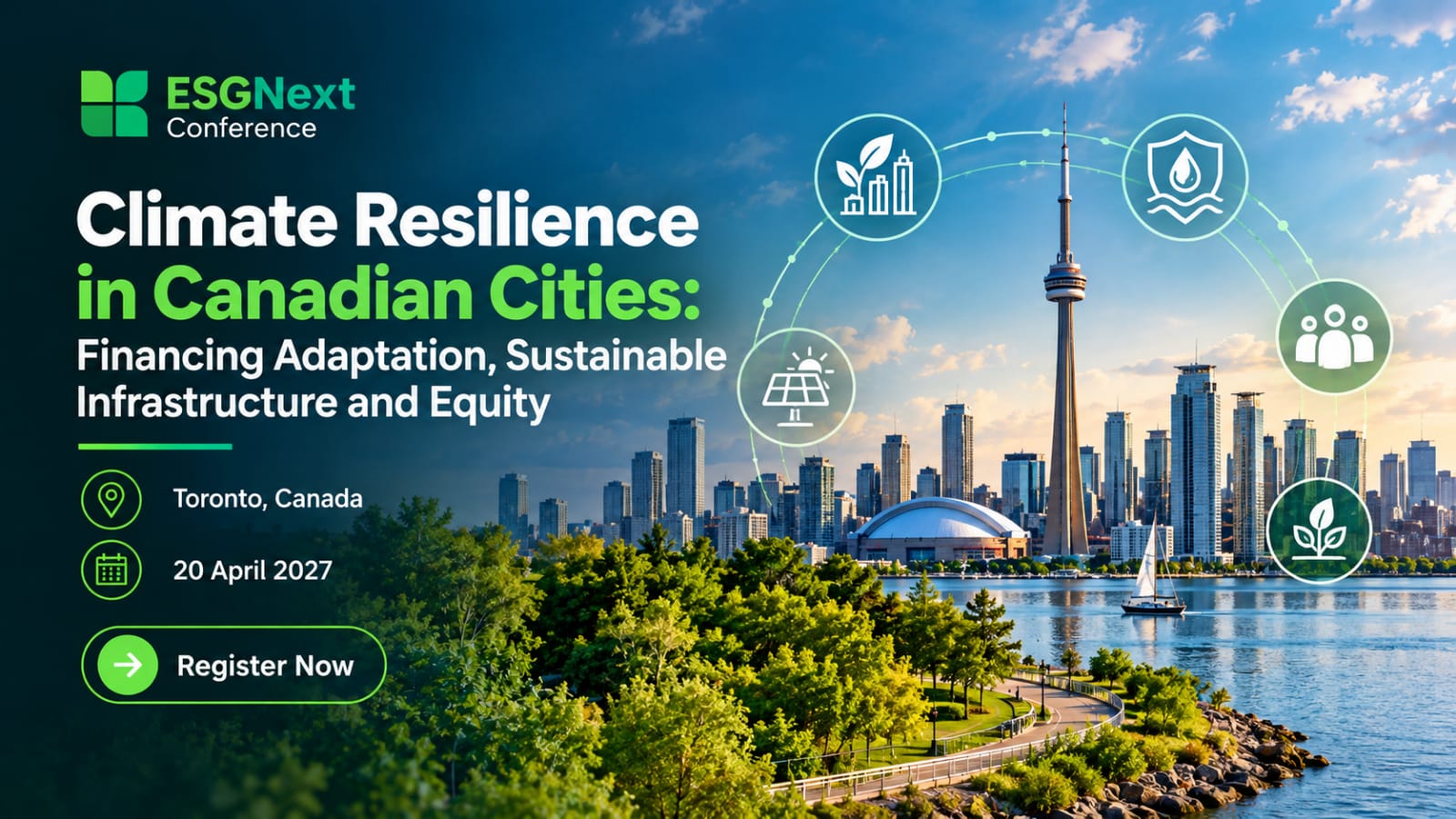
Canadian cities face growing climate challenges. Extreme heat, flooding, wildfires, aging infrastructure, and pressure on essential services are no longer distant risks. They are immediate concerns for municipal planning, investment, and governance, affecting businesses, investors, and communities alike.
The challenge facing Canadian cities is no longer just how to reduce emissions, but also how to adapt to climate impacts, protect people and assets, and finance the infrastructure needed for a changing climate. Adaptation must also be equitable. Communities most exposed to climate risks often have the fewest resources to prepare, respond, recover, and rebuild.
Canada has made adaptation a national priority. The country’s National Adaptation Strategy aims to ensure that, by 2050, all infrastructure systems are climate-resilient and able to deliver reliable, equitable, and sustainable services. Recent federal support also shows the scale of the challenge. In August 2026, the Government of Canada and the Federation of Canadian Municipalities announced $34.2 million in funding for 141 local climate adaptation projects. The projects support activities such as climate risk assessments, asset-management strategies, adaptation plans, and financing studies.
The financing gap
Municipalities are responsible for much of Canada’s local infrastructure, but their financial capacity is often limited. Roads, public transit, stormwater systems, housing, and energy networks all require long-term investment. Climate change adds to these costs by increasing the risk of damage, service disruptions, and expensive repairs.
Public funding remains essential, but additional financing mechanisms can help cities deliver adaptation projects at the scale required. Green bonds, blended finance, public-private partnerships, and insurance-based tools can complement government investment by attracting private capital and sharing financial risks. Reliable climate-risk data can also help investors and municipalities assess potential losses, compare project costs, and evaluate the long-term benefits of resilience investments.
Collaboration is already emerging. Initiatives such as the Financing Resilient Infrastructure Project bring municipalities and private investors together to identify opportunities for climate-resilient infrastructure. Canada’s Green Municipal Fund also supports municipal environmental projects and helps explore financing approaches that can attract additional investment.
The challenge is to make adaptation projects financially viable while ensuring that public benefits remain central. Strong project planning, transparent risk assessments, and clear measures of social and environmental outcomes can help municipalities secure funding without placing an unreasonable financial burden on residents.
Infrastructure built for tomorrow
Sustainable infrastructure must do more than withstand today’s weather. It must be designed for future climate conditions, integrate nature-based solutions, and support low-carbon growth.
This means embedding climate risk into planning, procurement, and asset management from the start. It also means treating green infrastructure—such as urban forests, wetlands, permeable surfaces, and cooling corridors—as essential assets, not optional enhancements. These solutions can reduce flood risk, improve air quality, lower urban heat, and create healthier public spaces.
For investors and developers, climate resilience is increasingly a matter of value protection. Assets that are not adapted to physical climate risks may face higher operating costs, insurance challenges, regulatory pressure, and reduced long-term value. Resilient design, by contrast, can strengthen asset performance and community trust.
Equity must guide adaptation
Climate resilience is not only an engineering or financing issue. It is a social issue.
Low-income neighborhoods, Indigenous communities, older adults, renters, and people with health vulnerabilities often face greater exposure to heat, flooding, and service disruptions. They may also have less access to insurance, cooling, safe housing, and financial support after extreme events.
Equity-informed adaptation asks a simple but important question: who benefits from resilience investment, and who could be left behind? Canadian adaptation funding is increasingly emphasizing inclusive and equitable approaches, with support for projects that deliver community benefits alongside climate protection.
Cities that place equity at the center of adaptation can build stronger public support, reduce long-term social costs, and create more durable climate outcomes.
The path forward
Canada’s next phase of climate action will depend on partnerships. Municipal governments cannot build resilient cities alone. They need investors, developers, utilities, insurers, technology providers, community organizations, and all levels of government to work together.
The opportunity is clear: finance adaptation, design infrastructure for long-term resilience, and ensure that the transition protects the people who need it most.
Join ESGNext Awards and Conference Canada in Toronto to explore how Canadian cities, investors, and business leaders can finance climate resilience, accelerate sustainable infrastructure, and build an equitable transition.