
The global sustainability landscape is shifting from ambitious long-term pledges to data-driven accountability. In 2027, this shift will become more visible as companies prepare for tighter reporting expectations, greater investor scrutiny and more rigorous sustainability data practices.
Regulatory developments, investor scrutiny and advances in digital reporting are increasing expectations for credible sustainability disclosures. Frameworks such as the European Union’s Corporate Sustainability Reporting Directive (CSRD), alongside the ISSB’s global baseline for sustainability disclosure, help shape how organizations report sustainability-related risks, opportunities and impacts. However, reporting obligations vary by jurisdiction and company, making it important for businesses to understand which requirements apply to them.
CSR: From goodwill to measurable outcomes
Corporate social responsibility (CSR) is no longer only a public-relations exercise. Community programs, ethical sourcing, employee wellbeing and environmental initiatives are increasingly judged by their scale, quality and durability.
A company may support local employment, reduce packaging waste or improve supplier working conditions. However, stakeholders increasingly expect businesses to demonstrate the scale, quality and durability of these outcomes through clear targets and reliable evidence.
ESG: Sustainability as operational discipline
Environmental, social and governance (ESG) criteria have evolved into essential tools for managing risk and improving operational performance. They help companies understand exposure to climate risk, supply-chain disruption, human-rights issues, data privacy, governance failures and shifting regulation.
Consider a global technology manufacturer. Rather than simply pledging to become carbon neutral by 2030, it may need to show how it is improving emissions visibility across its value chain, reducing energy consumption in manufacturing facilities and using digital systems to track progress.
For example, IoT sensors, AI-enabled analytics and supplier data platforms can help a company identify energy hotspots, monitor Scope 3 emissions and prepare more reliable disclosures. Yet technology alone is not enough. Poor data quality, inconsistent methodologies and unsupported claims can create new greenwashing risks.
Impact investing: Capital with evidence
Impact investing has matured into a mainstream approach that seeks both financial returns and measurable real-world outcomes. Its defining feature is intentionality: impact is not an incidental benefit, but a central objective of the investment.
A sustainable-agriculture fund, for instance, could move beyond reporting that capital was allocated to help farmers. It could provide investors with auditable metrics showing how its financing supported soil restoration, improved water-use efficiency, raised farmer incomes or strengthened climate resilience.
The most credible impact investors will look for clear theories of change, robust measurement frameworks, transparent reporting and independent verification where possible. The goal is not simply to claim impact, but to demonstrate it.
Making the approaches work together
Ultimately, 2027 will mark the normalization of sustainability. Companies are expected to define clear priorities, collect reliable data, disclose progress honestly and connect environmental and social performance to long-term value.
Some boards are linking executive incentives to sustainability targets, increasing the need for clear metrics and accountability. Investors, meanwhile, increasingly favor organizations that can demonstrate credible, quantifiable progress. In this environment, the winners will not be those with the boldest pledges, but those able to prove that their commitments create measurable results.
Join the conversation at ESGNext Awards & Conference Barcelona
How can organizations turn sustainability commitments into credible, measurable results?
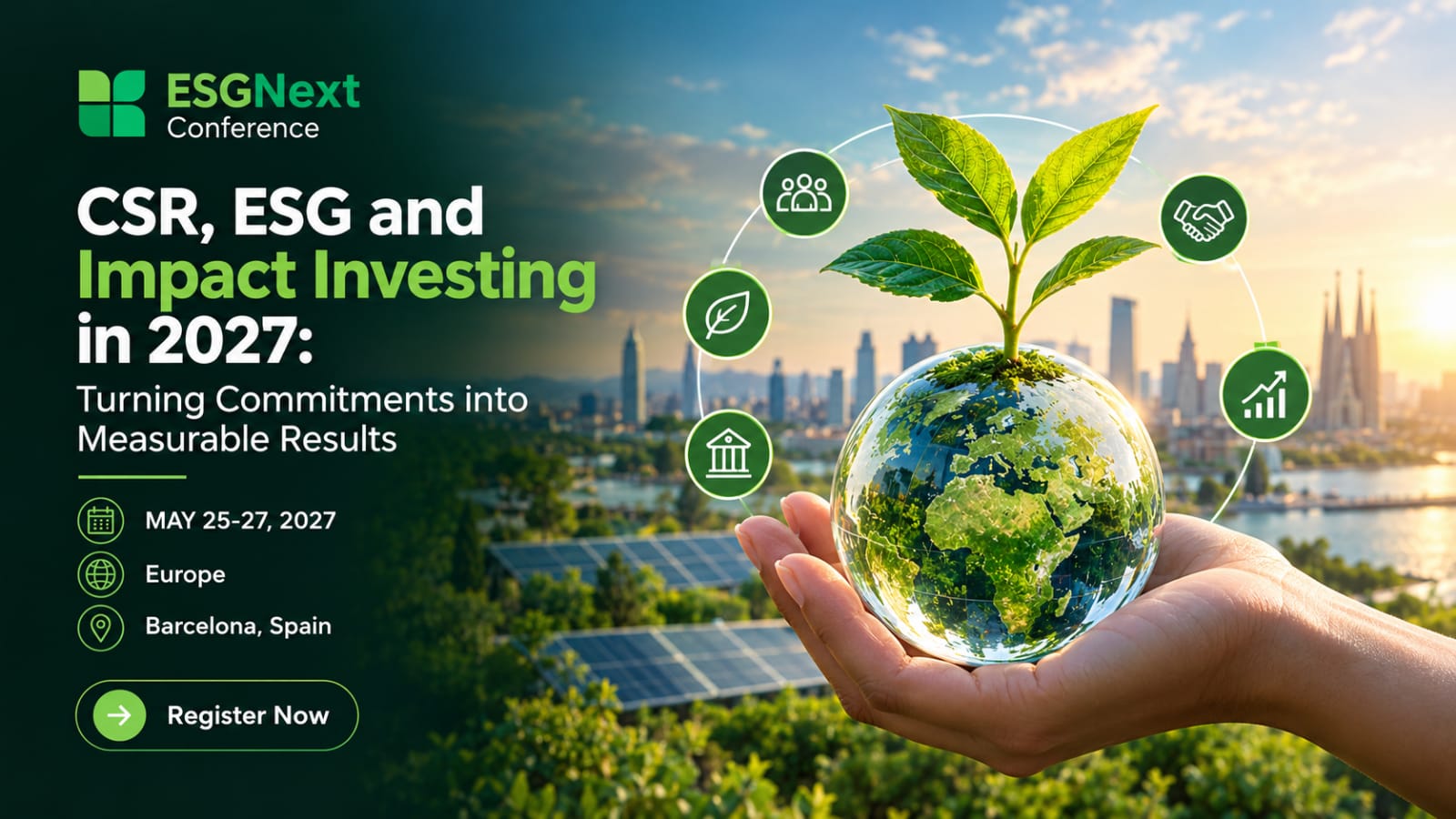
Join sustainability executives, investors, policymakers, researchers and climate-tech innovators at the ESGNext Awards & Conference Barcelona, taking place from 25–27 May 2027 in Barcelona, Spain.
Explore ESG strategy, sustainable finance, climate risk, sustainability reporting, supply-chain due diligence and decarbonization through expert discussions and real-world case studies.
Register now https://esgnextconference.com