
ESG reporting is moving from a largely voluntary sustainability exercise to a more structured compliance, risk, and corporate reporting function. In Europe, companies navigating the Corporate Sustainability Reporting Directive (CSRD) and European Sustainability Reporting Standards (ESRS) are facing growing expectations around data quality, traceability, governance, and assurance. At the same time, global companies are increasingly aligning their sustainability disclosures with the ISSB’s IFRS S1 and IFRS S2 standards.
For ESG teams, the challenge is no longer simply producing a polished sustainability report. It is building a reliable evidence base behind every material metric and disclosure. Data is often scattered across spreadsheets, ERP systems, utility bills, HR platforms, supplier questionnaires, contracts, and other documents. AI, combined with a modern ESG data architecture, can help turn this fragmented information into a more consistent, traceable, and assurance-ready reporting process.
Why AI for ESG Reporting Now?
Three pressures are converging.
First, sustainability reporting is becoming more data-intensive. Under the ESRS, companies apply a double materiality perspective, considering both how sustainability matters affect the company and how the company affects people and the environment. This requires information from across operations and, in many cases, the value chain.
Second, assurance is making data quality and controls increasingly important. Sustainability information needs to be supported by evidence, documented methodologies, defined controls, and traceable calculations. EFRAG’s 2026 State of Play report, based on 905 assured FY2025 sustainability statements, highlights the growing importance of consistent implementation and assurance practices.
Third, ESG data is becoming more complex. Scope 1, Scope 2, and Scope 3 emissions, workforce metrics, human rights information, governance indicators, and other sustainability data can originate from multiple systems and formats. AI can help ingest, classify, reconcile, and quality-check this information at scale.
The objective is not to replace professional judgment. It is to create an assurance-ready ESG data layer that allows sustainability, finance, risk, legal, and audit teams to work from reliable and traceable information.
High-Impact AI Use Cases for ESG Teams
The strongest AI use cases directly reduce reporting effort, improve data quality, or strengthen compliance controls.
Automated data collection and classification
AI can extract information from invoices, contracts, utility bills, procurement records, and other unstructured sources. It can identify energy use, fuel types, spend data, and other key fields, then map them to the right reporting categories. This reduces manual entry and improves consistency. Automated extraction should still be validated and controlled, especially when it supports material disclosures.
Scope 3 emissions
Primary supplier data is often incomplete, so companies rely on estimates, spend-based methods, or industry averages. AI can organise available data, identify gaps, improve estimation workflows, and prioritise suppliers for engagement based on emissions impact and data quality.
Double materiality assessments
Large language models can analyse stakeholder feedback, risk registers, regulatory updates, incident reports, and other qualitative inputs to identify potential sustainability topics and patterns. AI output should be treated as an input, not a final decision. Subject-matter experts must validate the results and apply professional judgment.
ESG reporting preparation
AI can draft methodology notes, policy explanations, data narratives, and other reporting content based on approved source information. ESG, finance, legal, and compliance teams can then review, validate, and approve the final text.
Pre-assurance testing
AI can sample transactions, flag unusual data points, recalculate selected emissions, compare current and prior periods, and check consistency between datasets and disclosures. These checks help teams identify and address issues before formal assurance begins.
Avoiding Greenwashing and AI Risk
Using AI in ESG reporting adds a new governance layer. Companies must be able to explain not only what they report, but how AI contributed to the result.
Maintain a clear audit trail covering data sources, emission factors, methods, assumptions, model inputs, validation checks, and manual changes. Every material figure should be traceable from source data to the reported result.
Human oversight remains essential. Qualified professionals should review AI outputs, particularly for key metrics, estimates, judgments, and narrative disclosures, with clear ownership and approval responsibilities.
Be transparent about where AI is used, such as data extraction, classification, estimation, anomaly detection, or drafting. Regular testing, version control, and monitoring should also be used to detect changes or errors.
The goal is simple: AI should strengthen ESG controls, not create a new black box within them.
From AI Experimentation to Assurance-Ready ESG Reporting
The strategic value of AI in ESG reporting is not simply faster report production. It is the ability to create a more reliable information infrastructure behind the report.
For European companies, that means connecting CSRD and ESRS requirements with better data collection, stronger controls, transparent methodologies, and repeatable assurance processes. For global organisations, it also means considering how European reporting requirements interact with broader sustainability reporting frameworks such as IFRS S1 and IFRS S2.
The companies that gain the most from AI will not necessarily be those using the most advanced models. They will be those that embed AI into well-governed data processes, maintain human accountability, and can demonstrate where every material sustainability figure comes from.
Join the Conversation at ESG Next Barcelona
The next phase of ESG reporting will require more than compliance—it will require reliable data, stronger controls, and greater confidence in how sustainability information is generated and assured.
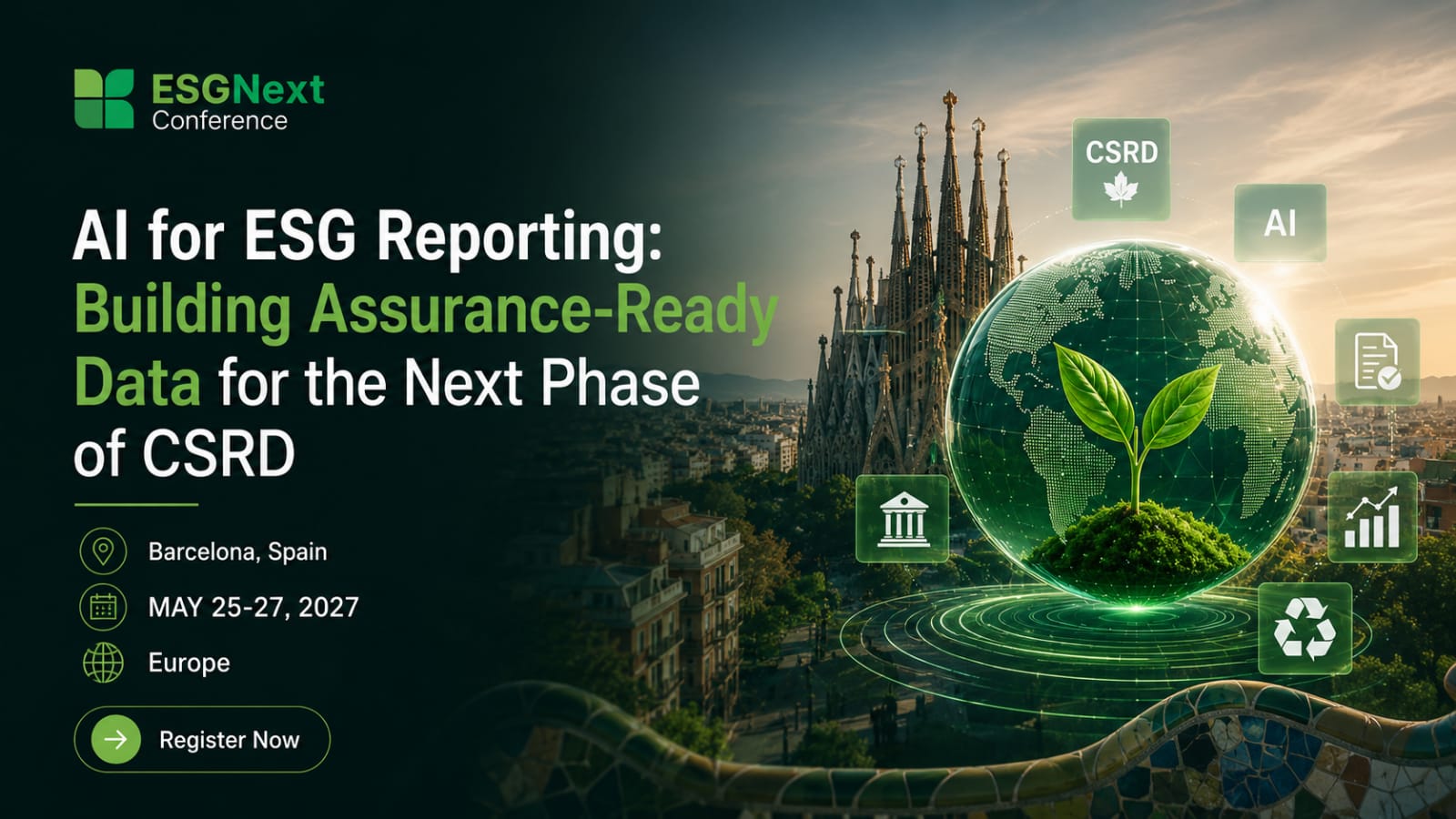
At ESG Next Barcelona 2027, sustainability, finance, reporting, technology, and compliance leaders will come together to explore how AI can transform ESG reporting, strengthen data quality, and support the next phase of CSRD implementation.
Join us in Barcelona from May 25–27, 2027, to explore practical strategies for building more credible, transparent, and assurance-ready ESG reporting systems.
Reference:
Nature / Scientific Reports — The impact of artificial intelligence-driven ESG performance