
Sustainability is no longer only a regulatory responsibility for European businesses. As climate risks, resource pressures and stakeholder expectations grow, companies are recognizing that environmental and social performance can affect costs, investment decisions, customer relationships and long-term growth.
The most forward-looking organizations are moving beyond ESG reporting. Their goal is not simply to demonstrate compliance, but to build more resilient, innovative and competitive business models.
From reporting to results
European companies operate in an increasingly demanding sustainability environment. Regulations, including the Corporate Sustainability Reporting Directive (CSRD), have increased the importance of transparent reporting and accountability for companies within their scope.
However, reporting alone does not create a competitive advantage. Businesses need to translate sustainability commitments into operational improvements, better products and measurable business outcomes.
For manufacturers, this could mean improving energy efficiency, reducing production waste and using materials more responsibly. For retailers, it may involve sustainable sourcing, better packaging and more transparent supply chains. These changes can reduce resource consumption, improve efficiency and help businesses respond to changing customer expectations.
Sustainability as a driver of innovation
Sustainability can also create opportunities for product development and new business models. Companies investing in renewable energy, circular production and low-carbon technologies can develop capabilities that differentiate them in competitive markets.
The circular economy is particularly important in this transition. Instead of following a traditional model of producing, consuming and discarding materials, businesses are exploring repair, reuse, recycling and material recovery.
These approaches can reduce dependence on virgin resources, limit waste and create additional value from existing materials. They can also help companies prepare for changing market expectations and resource availability.
According to the European Environment Agency, circular business models are increasingly relevant to Europe's competitiveness, resource security and industrial transition.
Ørsted: Turning a business transformation into competitive advantage
Danish energy company Ørsted offers one of Europe’s clearest examples of sustainability as a strategic transformation.
Formerly DONG Energy, the company relied heavily on fossil fuels: approximately 85% of its power and heat production came from coal in 2008. In 2009, it began shifting its business model, investment priorities and market positioning towards renewable energy, particularly offshore wind.
By 2019, renewables accounted for 86% of its energy generation—achieving its original 85% target 21 years ahead of schedule. In 2025, Ørsted reported that renewables represented 99% of its energy generation, while its Scope 1 and 2 emissions intensity had fallen by more than 98% compared with 2006.
Ørsted’s experience shows that sustainability can be central to strategy rather than an add-on to it. By repositioning around renewable energy, the company created opportunities in a growing market and strengthened its long-term relevance.
Building supply-chain resilience
Sustainability also strengthens resilience. Extreme weather, resource shortages, energy-price volatility and trade disruption can expose weaknesses across global supply chains.
Companies that understand their environmental and supply-chain impacts can identify vulnerabilities earlier and act sooner. Practical measures include diversifying suppliers, improving traceability, improving energy efficiency and working with suppliers to reduce emissions.
For European businesses competing internationally, these actions can support operational continuity while reinforcing confidence among customers, investors and partners.
Measuring what matters
To make sustainability commercially meaningful, businesses need to connect ESG targets with performance indicators that matter to the business: energy use per unit of production, emissions, water efficiency, waste reduction, renewable-energy use and supplier performance.
They should also assess financial impact. Energy savings, lower material costs, improved resource efficiency and access to new markets can help demonstrate the return on sustainability investments.
The key is discipline: realistic targets, consistent measurement and long-term commitment. Sustainability should not become a marketing exercise or a collection of disconnected initiatives.
The competitive opportunity
Sustainability and competitiveness are increasingly interconnected. Companies that embed ESG principles into investment, innovation, procurement and operational decisions are better placed to manage risk, respond to market change and create durable value.
The opportunity lies in moving beyond compliance towards meaningful transformation. Organizations that combine measurable environmental progress with clear commercial objectives will be best positioned to build resilient operations, develop innovative solutions and lead Europe’s next phase of sustainable growth.
Join the conversation
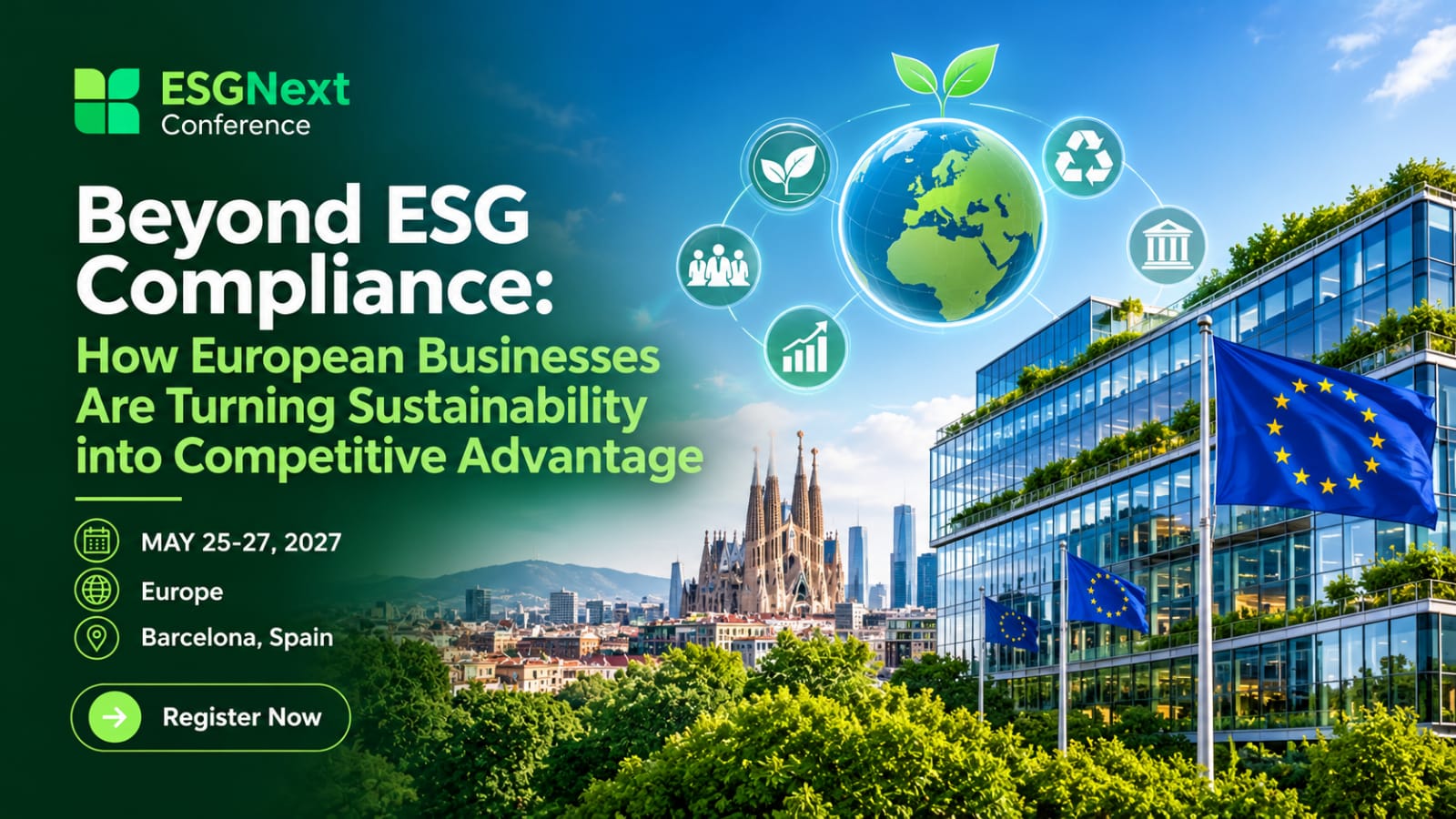
The ESGNext Awards and Conference will take place on 25–27 May 2027 in Barcelona, Spain, bringing together business leaders, sustainability professionals, policymakers and innovators to discuss emerging ESG priorities, responsible business practices and the future of sustainable competitiveness. Be part of the conversation shaping the next phase of sustainable business transformation.
Register now: https://esgnextconference.com