
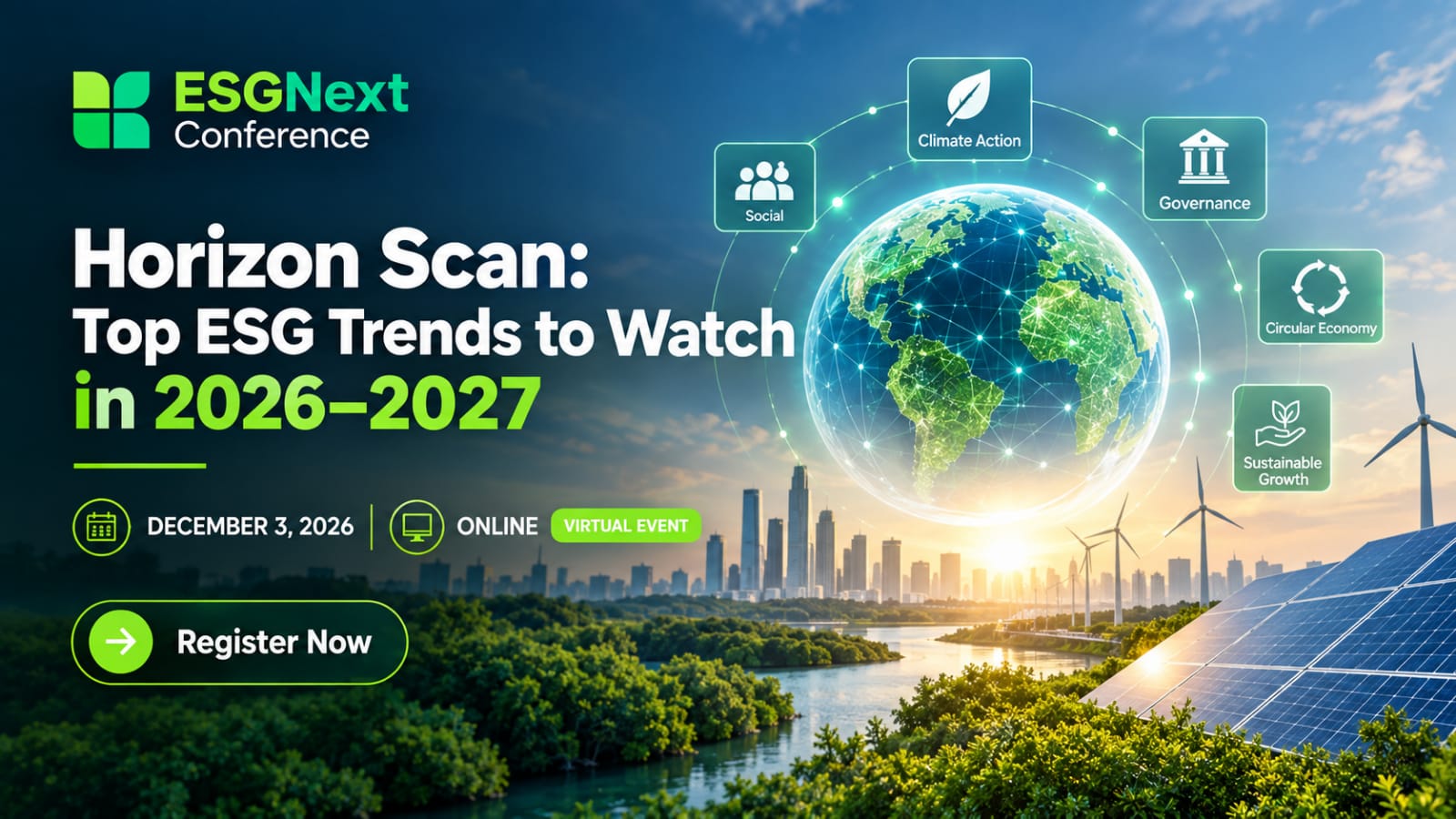
ESG is no longer simply a reporting exercise. It is becoming a strategic, regulatory, and operational priority. As mandatory disclosure regimes evolve and scrutiny increases, the focus is shifting from what companies disclose to how they implement, verify, and govern their sustainability commitments. For boards, sustainability leaders, and investors, understanding the key ESG trends shaping 2026–2027 is increasingly important for managing risk and identifying opportunities.
From disclosure to implementation and assurance
A defining ESG theme for 2026 is the move from reporting to implementation. In Europe, companies are adapting to evolving CSRD requirements and simplified European Sustainability Reporting Standards (ESRS), while continuing to strengthen data quality and assurance processes.
Businesses are moving beyond one-off sustainability reports toward embedded systems for double materiality assessments, value-chain data collection, internal controls, and audit-ready documentation. For multinational companies, this also means managing the relationship between ISSB-aligned reporting, EU requirements, and other national and regional disclosure rules.
The result is a growing need for ESG information to be managed with the same discipline applied to financial and operational data.
Regulatory fragmentation and enforcement risk
Regulatory divergence is becoming an important challenge for global companies. In the United States, the SEC’s federal climate disclosure rules remain subject to regulatory and legal developments, while California's SB 253 and SB 261 establish separate climate-related reporting requirements and timelines.
In Europe, green-claims regulation is also placing greater emphasis on substantiation and transparency. The EU's Empowering Consumers for the Green Transition Directive introduces requirements intended to address misleading environmental claims and sustainability information.
For companies operating across multiple markets, this fragmented landscape makes regulatory horizon scanning increasingly important. A sustainability claim, metric, or disclosure approach that meets the requirements of one jurisdiction may require additional evidence or adaptation in another.
Nature, transition finance, and circular economy move to the core
Beyond carbon, three areas are gaining greater strategic importance: nature and biodiversity, transition finance, and the circular economy.
Nature and biodiversity are moving closer to mainstream corporate strategy. Governments and regulators are increasingly considering how corporate nature-related information can support national biodiversity objectives, while frameworks such as the Taskforce on Nature-related Financial Disclosures (TNFD) are helping organizations identify, assess, and communicate nature-related dependencies, impacts, risks, and opportunities.
Transition finance is also developing as companies in hard-to-abate sectors seek capital to reduce emissions while maintaining viable business operations. Frameworks such as the UAE Transition Finance Framework are helping define how financing can support credible transition activities and plans.
Meanwhile, circular economy requirements are becoming increasingly relevant to product design and compliance. EU rules covering packaging and packaging waste, alongside emerging circularity requirements in sectors such as automotive, are pushing companies to reconsider materials, product design, resource efficiency, and end-of-life management.
These developments have direct implications for sectors including energy, agriculture, manufacturing, and plastics, where grid modernization, climate-resilient production, resource efficiency, and packaging redesign are becoming increasingly important ESG priorities.
AI, data consolidation, and the evolving ESG function
Artificial intelligence is beginning to reshape how organizations collect, analyze, and manage ESG information. AI-enabled tools can support activities such as double materiality analysis, emissions estimation, data classification, and the preparation of sustainability disclosures.
However, greater use of AI also creates new governance requirements. Companies need to understand where data comes from, how calculations are performed, how models are used, and whether outputs can be traced and reviewed. Human oversight, data governance, documentation, and audit trails will therefore remain essential.
At the same time, ESG technology is becoming more integrated. Carbon-accounting, sustainability-management, and reporting platforms are increasingly moving toward enterprise-wide data environments rather than isolated reporting tools. For ESG teams, the priority will be to build technology-enabled workflows that are transparent, controllable, and ready for assurance.
What leaders should do next
To navigate the ESG landscape of 2026–2027, organizations should focus on four priorities:
Prioritize assurance readiness: Treat ESG data with the discipline applied to financial information, including clear ownership, documented methodologies, internal controls, and supporting evidence.
Map regulatory exposure: Identify the sustainability rules that apply across key markets and assess whether public disclosures and environmental claims can withstand different regulatory requirements.
Integrate nature and transition finance: Expand sustainability strategy beyond carbon by considering nature-related dependencies and risks alongside credible transition plans and financing opportunities.
Upgrade ESG technology and governance: Consolidate fragmented data sources, establish clear policies for AI use, and maintain traceable audit trails for model-assisted calculations and sustainability narratives.
For companies treating ESG as a core business discipline, 2026–2027 will be a period of continued regulatory change and operational transformation. Organizations that strengthen data quality, governance, transition planning, and implementation capabilities will be better positioned to respond to evolving expectations and build greater credibility with stakeholders.
Explore the future of ESG transformation at the ESG Next Awards & Conference 2026. Connect with sustainability leaders and industry experts to explore how emerging ESG trends can be translated into measurable action.