
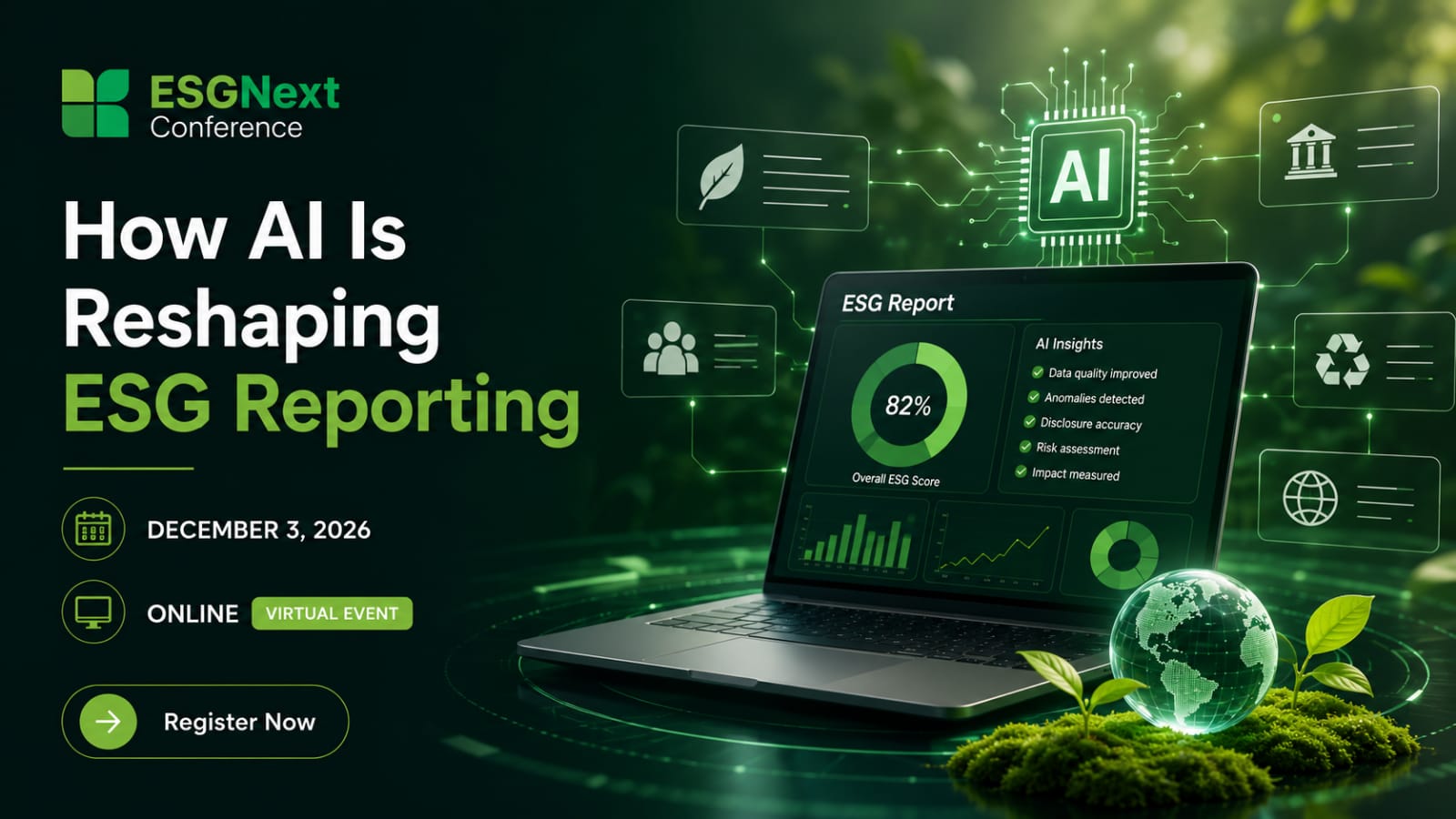
With demand for real-time, verifiable Environmental, Social, and Governance (ESG) data rising, artificial intelligence is moving from a useful add-on to a strategic capability. As boards, investors, and regulators expect faster, more transparent disclosures, AI is helping organizations transform how they collect, analyze, validate, and report ESG data.
The Rise of AI in ESG
AI has shifted from experimentation to enterprise adoption. According to McKinsey & Company’s State of AI research, 78% of organizations reported using AI in at least one business function in 2024, up from 55% the previous year.
This sharp increase reflects how quickly automation and advanced analytics are becoming embedded in core business operations.
For ESG teams, the shift is particularly significant. ESG reporting is no longer simply about compiling information at the end of a reporting cycle. Organizations increasingly need reliable, decision-ready sustainability data throughout the year.
The AI-in-ESG and sustainability market is also expanding rapidly. Valued at USD 1.24 billion in 2024, the market is projected to reach USD 14.87 billion by 2034, representing a CAGR of 28.2%. This growth indicates that AI is becoming an increasingly important part of sustainability and reporting infrastructure rather than remaining limited to pilot projects.
What AI Does in ESG
AI is reshaping ESG reporting by automating data ingestion, standardizing information, and identifying anomalies through machine learning. It can process information from enterprise resource planning (ERP) systems, supplier platforms, operational databases, news sources, and third-party datasets, helping organizations bring fragmented ESG information into a more consistent reporting environment.
For ESG teams, this can reduce the time spent collecting and reconciling data and create more capacity for analysis and decision-making.
AI's value extends beyond automation. Three capabilities are particularly important: predictive forecasting, anomaly detection, and continuous monitoring.
Predictive forecasting can help organizations identify emerging sustainability risks and trends before they become more significant. Anomaly detection can flag inconsistencies, missing information, unusual patterns, or potential data-quality issues. Continuous monitoring can provide leaders with more frequent visibility into ESG performance instead of relying solely on periodic reporting cycles.
Together, these capabilities can shift ESG from a largely retrospective disclosure exercise toward a more forward-looking management process. This is increasingly relevant as institutional investors adopt AI-enabled tools to analyze sustainability information and assess ESG-related risks.
Why Innovation Matters
Traditional ESG reporting processes were largely designed around periodic data collection and disclosure. However, the pace of regulatory change, stakeholder expectations, and corporate sustainability activity is increasing. Static reporting processes alone may not provide the speed, traceability, and data quality organizations now require.
Innovation is therefore becoming an important component of ESG credibility.
AI can help reduce manual errors, improve data consistency, identify gaps, and strengthen the processes behind reporting outputs. It can also support board-level decision-making by highlighting emerging risks and making sustainability performance easier to monitor over time.
However, technology alone cannot guarantee trustworthy ESG reporting. AI-generated outputs still depend on the quality of the underlying data, the controls applied to the system, and appropriate human oversight. Strong governance remains essential for ensuring that automated processes are transparent, explainable, and aligned with reporting requirements.
This is where platforms such as the ESG Next Awards and Conference can contribute to the wider conversation. Bringing together sustainability leaders, business executives, and technology experts, ESG Next provides a forum to examine how AI is influencing ESG data management, reporting, verification, regulatory readiness, and sustainability decision-making.
At ESG Next Virtual, discussions can explore how AI can improve data collection, strengthen verification processes, and turn ESG information into more actionable insights. Just as importantly, the conversation can address a critical question for organizations: how can businesses balance automation with human oversight while maintaining the trust and credibility of ESG reporting?
Closing Thought
AI is not replacing ESG expertise. It is augmenting it.
As reporting expectations continue to evolve, organizations that combine intelligent technology with strong data governance, robust controls, and human judgment will be better positioned to deliver ESG information with greater speed, consistency, and confidence.
The future of ESG reporting will not be defined by automation alone. It will be shaped by how effectively organizations use AI to turn complex sustainability data into reliable information for better decisions.