
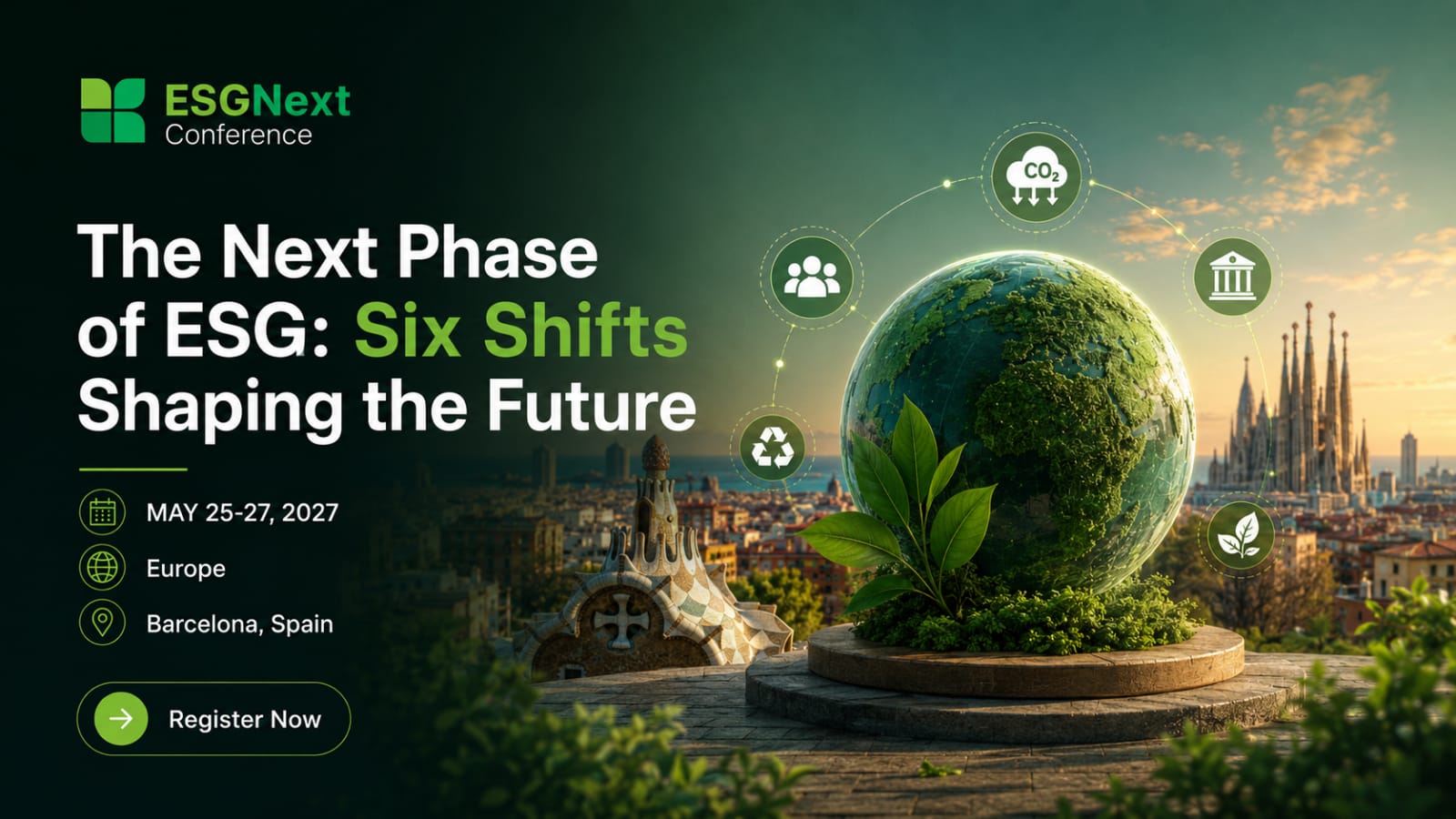
For years, ESG strategy was largely defined by ambitious targets, public commitments, and long-term sustainability plans. The focus is now shifting from promises to performance.
As expectations rise, companies are being judged by how effectively they turn ESG commitments into measurable outcomes—from advancing circularity and reducing Scope 3 emissions to strengthening transparency and using AI responsibly.
For businesses across industries, the next phase of ESG will be defined less by ambition and more by execution, accountability, and measurable impact.
Circularity Has Become a Business Strategy
Circularity is no longer just an environmental initiative. It is becoming a business strategy.
Organizations are increasingly looking for reliable sources of refurbished equipment, recovered materials, and verified recycling partners that can support sustainability goals while strengthening supply chain resilience. Without market demand, even strong collection and recycling programs struggle to scale.
This shift is reflected in the work of the Circular Electronics Partnership (CEP), which brings together stakeholders across the electronics value chain to advance circular design, reuse, recycling, and secondary material markets.
For businesses, circularity is becoming part of product strategy, procurement, customer expectations, and long-term growth.
Trust Is Becoming ESG’s Most Valuable Currency
As sustainability expectations mature, organizations face greater scrutiny over the claims they make. Describing a product or program as green is no longer enough. Stakeholders increasingly expect recognized standards, transparent reporting, and measurable results.
Initiatives such as EPEAT Renew illustrate how third-party verification can strengthen confidence in refurbished electronics by establishing criteria for product quality, responsible processing, data sanitization, and lifecycle performance.
Whether an organization is reporting emissions reductions, managing electronics responsibly, or supporting circularity, credibility increasingly depends on documented processes, verified standards, and reliable data.
Trust is not built through marketing. It is built through transparency.
Scope 3 Progress Depends on Stronger Partnerships
Reducing Scope 3 emissions remains one of the most difficult sustainability challenges—and one of the biggest opportunities.
The same shift is reflected in the Science Based Targets initiative’s Corporate Net-Zero Standard Version 2.0, which places greater emphasis on implementation and integrating climate action into business decision-making.
Companies cannot address Scope 3 emissions alone. Progress depends on stronger supplier engagement, better data, greater transparency, and partnerships built around measurable outcomes.
For businesses managing complex supply chains and assets, this means looking beyond individual transactions. Working with partners that can provide reliable data, responsible practices, and transparent reporting can support broader sustainability objectives while strengthening operational resilience.
The organizations making the greatest progress are not treating Scope 3 as a reporting exercise. They are integrating emissions reduction into procurement, supplier relationships, operational planning, and long-term business strategy.
AI Can Accelerate Sustainability—If We Use It Responsibly
Artificial intelligence can help organizations analyze emissions data, optimize logistics, improve supply chain visibility, assess climate risks, and support faster decision-making.
But AI also creates its own environmental and resource demands. Sustainability leaders therefore need to consider not only what AI can deliver, but also the energy, infrastructure, data, and resources required to operate it.
The opportunity is not simply to adopt AI. It is to use it thoughtfully, efficiently, and responsibly.
ESG Data Is Becoming Decision-Grade
ESG data is moving beyond annual reporting. Companies increasingly need reliable, traceable, and timely information that can support procurement, investment, risk management, and operational decisions.
Better data systems can help organizations connect environmental performance with business activity, identify gaps, track progress, and respond more effectively to regulatory and stakeholder expectations.
The shift is from collecting ESG data for disclosure to using it as a management tool.
From Ambition to Execution
The next phase of ESG will be defined by how deeply sustainability is integrated into everyday business decisions.
Procurement teams are evaluating suppliers through environmental and social criteria. Manufacturers are reconsidering product design and material choices. Asset managers are demanding stronger evidence behind sustainability claims. Companies are looking for measurable reductions rather than broad commitments.
This is where ESG becomes operational.
The organizations that make the greatest progress will be those that connect sustainability targets with budgets, responsibilities, partnerships, data, and measurable outcomes.
The Next Arena: ESG Next Barcelona
These six shifts—circularity, trust, Scope 3 partnerships, responsible AI, decision-grade data, and execution—are likely to shape the next wave of ESG discussions in Europe.
ESG Next Barcelona, scheduled for 25–27 May 2027, will bring together industry and academic perspectives around practical challenges including climate risk, sustainable finance, energy transition, technology governance, reporting, and decarbonization.
For organizations moving from ESG ambition to measurable action, the next phase is about turning strategy into execution—and demonstrating results.