
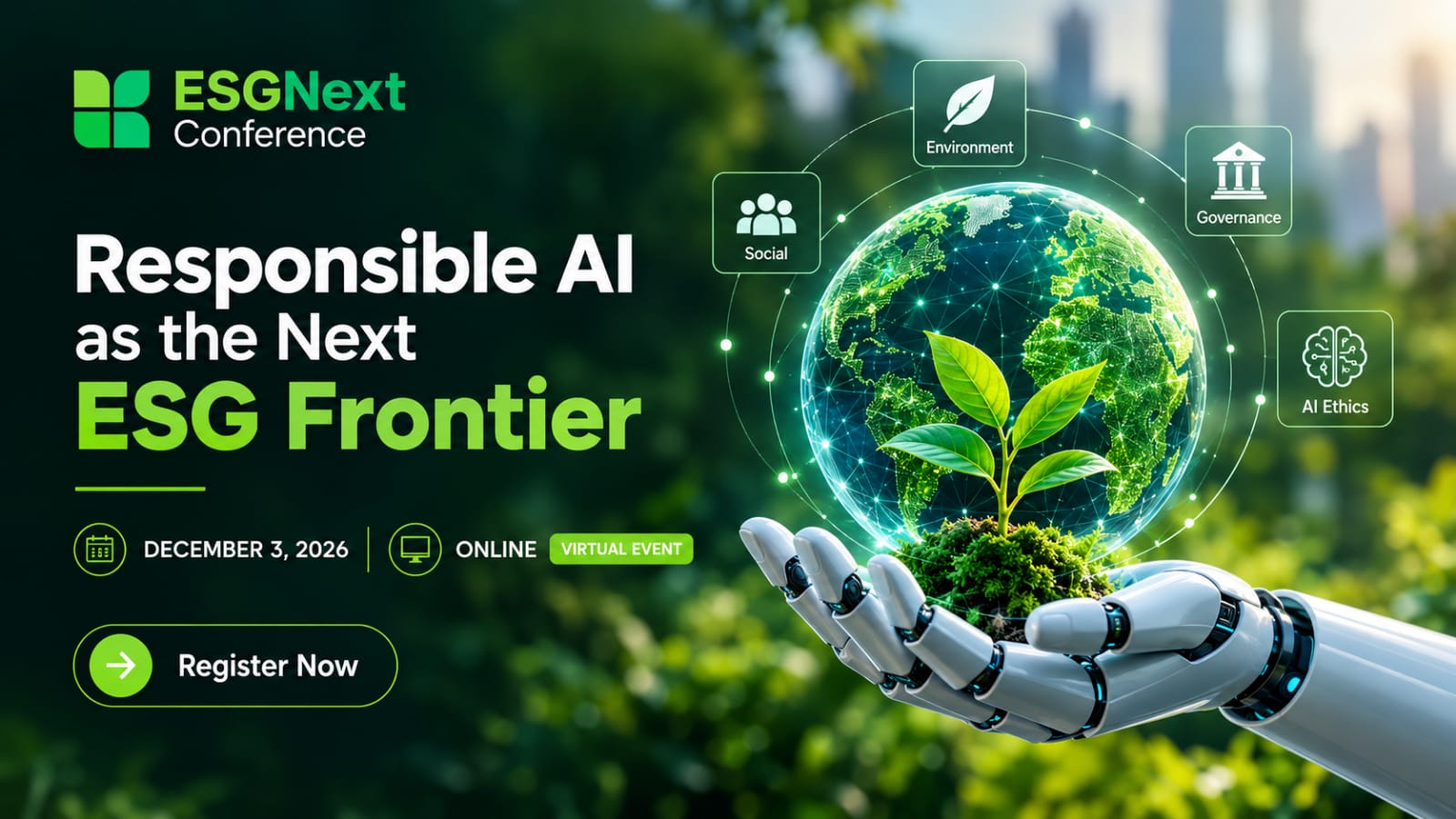
Artificial intelligence is rapidly becoming a core enabler of ESG performance—accelerating data collection, analysis, and reporting—while simultaneously emerging as a material ESG risk in its own right. The most forward-looking companies in 2026 are treating responsible AI governance not simply as an IT issue, but as an ESG imperative that affects climate footprints, social trust, and board-level accountability.
Why Responsible AI Belongs in ESG
Responsible AI is not simply about preventing technical failures. It is about ensuring that AI systems are developed and used in ways that are transparent, accountable, fair, secure and aligned with organizational values.
NIST's AI Risk Management Framework, for example, is designed to help organizations manage AI risks and promote trustworthy and responsible AI. Its approach is structured around four functions: Govern, Map, Measure and Manage.
These principles closely connect with the three pillars of ESG.
Environmental: AI systems can consume significant computing resources and energy, making efficiency and resource use increasingly relevant to sustainability strategies. The EU AI Act also addresses environmental sustainability, including resource performance and energy-efficient AI development. (Digital Strategy)
Social: AI decisions can affect employees, customers and communities. Bias, discrimination, privacy and accessibility therefore become important social considerations.
Governance: Organizations need clear accountability for AI systems, including policies, risk controls, documentation, monitoring and human oversight.
From AI Adoption to AI Accountability
The next stage of AI maturity will focus less on how many AI tools a company uses, and more on how responsibly those systems are governed.
An organization may use AI to accelerate recruitment, analyze customer behavior or automate decisions. But without appropriate controls, these applications can create risks that extend beyond the technology team.
Boards and sustainability leaders therefore need visibility into questions such as:
•What AI systems are being used across the organization?
•What data are those systems using?
•Could their outputs create discriminatory outcomes?
•Who is accountable when an AI system makes a harmful decision?
•How are AI risks monitored after deployment?
•How much energy and computing resources are AI systems consuming?
•Can important AI-driven decisions be explained and audited?
These questions turn Responsible AI from a technology concern into a governance and ESG priority.
The Rise of AI Due Diligence
The direction is becoming clearer internationally. In February 2026, the OECD published its Due Diligence Guidance for Responsible AI, providing practical guidance for enterprises to address adverse impacts associated with AI while connecting responsible AI with broader responsible business conduct.
This matters because organizations are moving toward a more systematic approach to AI risk. Instead of asking only whether an AI system works, businesses increasingly need to ask whether it works fairly, safely, transparently and sustainably.
That shift mirrors the evolution of ESG itself—from broad commitments toward measurable processes, evidence and accountability.
Responsible AI and the Future of ESG Reporting
ESG reporting is also becoming more data-driven. Companies are expected to provide increasingly reliable information about their environmental and social impacts. In July 2026, the European Commission adopted revised European Sustainability Reporting Standards designed to simplify reporting while maintaining the quality of sustainability disclosures.
AI can help organizations collect, analyze and validate large volumes of ESG data. It can identify anomalies, automate reporting workflows and improve the speed of analysis.
But the use of AI in ESG reporting creates its own governance questions.
If AI generates or validates sustainability information, organizations need confidence that the underlying data is accurate, the methodology is appropriate and the outputs can be traced and reviewed.
The objective should therefore not be AI-generated ESG reporting, but AI-enabled ESG reporting with strong human accountability.
Building Responsible AI Into ESG Strategy
Organizations can begin by treating AI governance as part of their wider ESG and enterprise-risk architecture.
A practical approach includes four priorities:
1. Establish clear accountability
Define who owns AI risks at board, executive and operational levels.
2. Map AI systems and their impacts
Understand where AI is being used, what data it relies on and who may be affected.
3. Measure what matters
Assess factors such as bias, accuracy, privacy, security, explainability, energy consumption and social impact.
4. Monitor continuously
AI risks do not disappear after deployment. Models, data, regulations and use cases change over time, making ongoing monitoring essential. NIST similarly emphasizes continuous risk management throughout the AI lifecycle.
The Next ESG Frontier
ESG is evolving from a reporting exercise into a broader framework for responsible business performance. AI is accelerating that evolution.
Companies that treat Responsible AI as a standalone technology initiative may miss its wider implications. Those that integrate AI governance into ESG, risk management and corporate strategy can build stronger foundations for trust.
The goal is not to slow AI adoption. It is to make AI adoption more accountable, transparent and sustainable.
As AI becomes embedded across business operations, Responsible AI may become one of the defining governance questions of the next phase of ESG. The future of ESG will not only ask what impact a company has. It will increasingly ask how the technology behind its decisions creates that impact.
Join ESGNext Awards & Conference
Explore how organizations can move from ESG commitments to measurable, technology-enabled impact at ESGNext Conference — December 3, 2026, Online.
Join industry leaders and sustainability professionals to discuss Responsible AI, ESG governance, reporting, transparency and the technologies shaping the future of responsible business.
Register now: https://esgnextconference.com
Date: Thursday, December 3
Time: 3:30 AM–11:30 AM (GMT+5:30)
Format: Online